
Mechanical Parking Systems: Why They Are the Preferred Urban Solution
As urban parking shortages become increasingly severe, mechanical multi-story parking systems have emerged as a highly effective solution that maximizes the use of limited land resources. This article clearly explains their advantages and the value they bring when implemented.
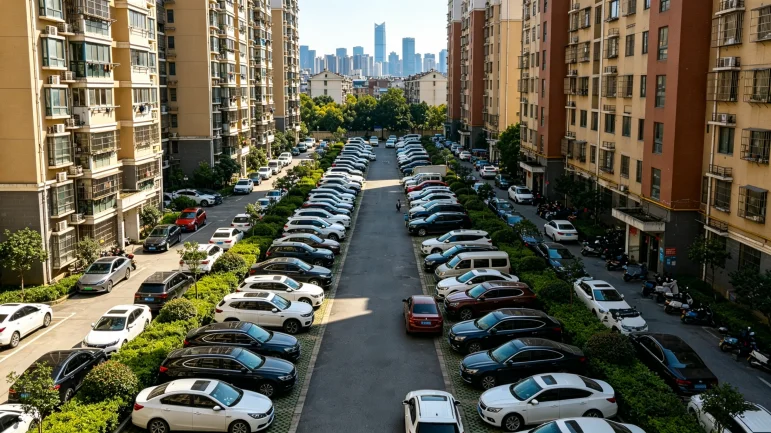
As urbanization continues to advance in China, parking shortages have become a serious social issue. In fact, in many major cities, the number of privately owned vehicles exceeds 3 million, while the supply of parking spaces remains insufficient, with parking space shortages exceeding 50% in many cases. In other words, roughly one out of every two vehicles struggles to secure an appropriate parking space.
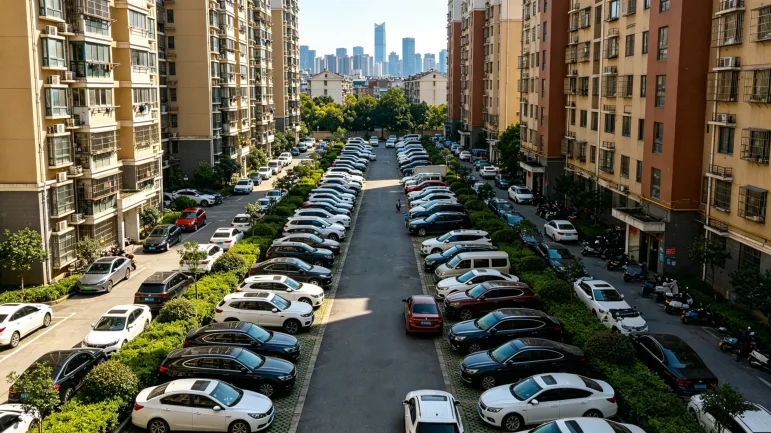
Available land on the ground is limited, and the development of underground space is also subject to various constraints. As a result, issues such as on-street parking and the occupation of spaces required for emergency and firefighting activities have become increasingly common. Parking shortages are no longer merely a matter of convenience, but have evolved into a critical issue affecting overall urban management.
In response to this situation, mechanical multi-story parking systems have emerged as an effective solution.
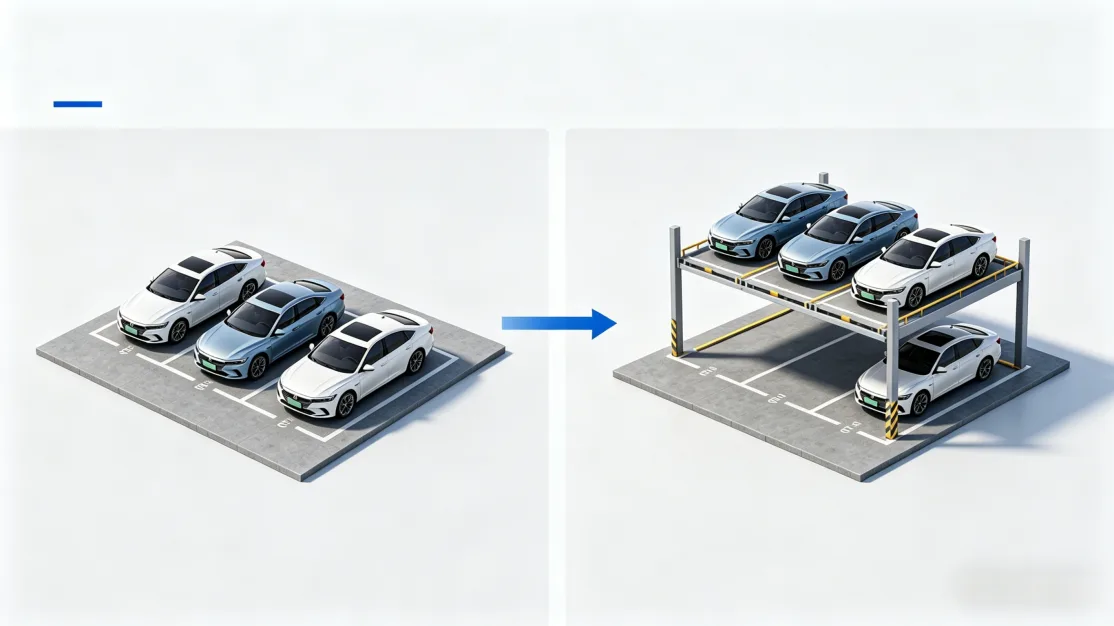
The principle is very simple. To make the most efficient use of limited land, vehicles are not arranged in a flat layout but are instead stored vertically by utilizing upward and downward space. By combining mechanical systems such as lifting and horizontal transfer devices, it becomes possible to accommodate significantly more vehicles within a space that would traditionally only hold a few cars.
In this way, the ability to greatly increase parking capacity without expanding the land area is a key advantage unique to mechanical multi-story parking systems, which cannot be achieved with conventional flat parking lots.
The reasons why mechanical multi-story parking systems are regarded as an effective solution can be broadly summarized into the following three key points.
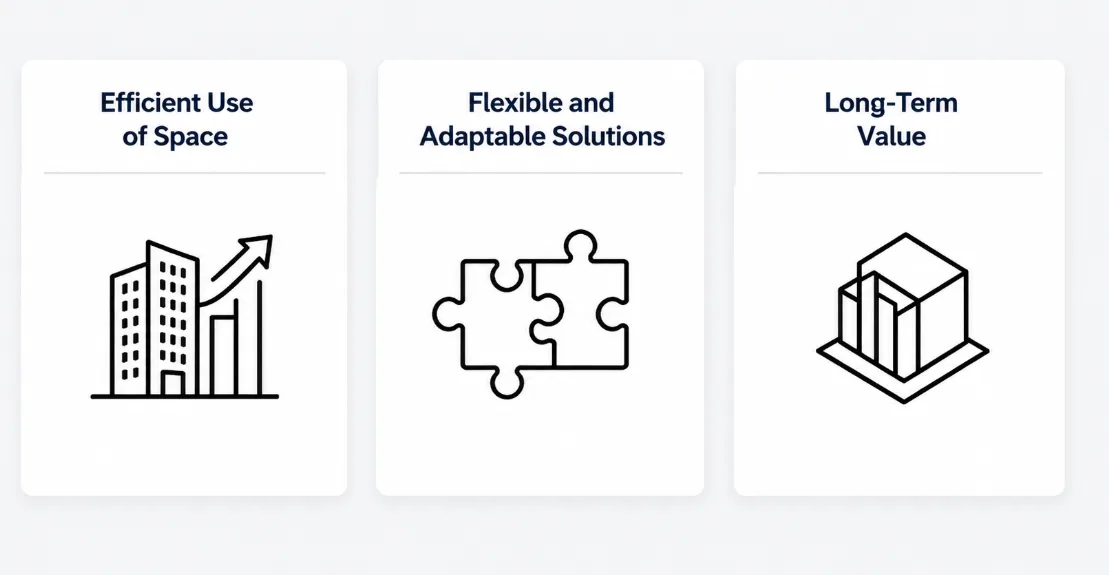
① Practicality of Efficient Space Utilization
One of the key advantages of mechanical multi-story parking systems is their ability to increase parking capacity while fully utilizing existing land.
Without requiring large-scale redevelopment or long construction periods, these systems make effective use of current site conditions by expanding vertically or utilizing underground space, allowing parking capacity to be increased within a short timeframe even in limited areas.
This approach is particularly valued in densely built-up urban areas, aging residential districts, and high land-value city centers where acquiring additional land is difficult. It offers a practical and highly effective method of expansion.
② Flexibility to Meet Diverse Needs
Mechanical multi-story parking systems are not a single standardized product but rather a family of solutions that can be selected according to different applications and conditions.
For example, in projects where cost and construction time are the primary concerns, mature technologies such as lift-and-slide systems are commonly used. On the other hand, in high-end commercial facilities and hospitals where convenience and turnover efficiency are critical, smart automated parking systems with robotic handling are adopted, enabling driverless operation and smooth vehicle access.
The ability to select the optimal system based on usage, budget, and site conditions is one of its major strengths.
③ Comprehensive Long-Term Value
The value provided by mechanical multi-story parking systems goes far beyond simply increasing the number of parking spaces.
They contribute to improved safety by preventing illegal parking and ensuring clear access for emergency and firefighting operations. They also enhance property and facility value and support sustainable urban development through more efficient use of limited urban space.
In other words, mechanical multi-story parking systems are not only facilities that “increase parking capacity,” but also essential infrastructure that supports the overall improvement of urban functions.
There is no universal solution that can address all aspects of parking shortages. However, mechanical multi-story parking systems represent a highly effective option that maximizes limited land, adapts to diverse needs, and delivers long-term benefits such as improved safety, convenience, and asset value.
As parking demand continues to grow in urban areas, mechanical parking systems that combine engineering technology with spatial optimization concepts will play an increasingly important role as a key solution for creating efficient and sustainable parking environments.
About the Author

Shay Chen
Marketing Manager at CoPARK. Dedicated to promoting automated parking solutions and building partnerships across global markets.