
Upgrading Old Residential Areas with Mechanical Parking: A Practical Solution to Urban Parking Problems
This article explores how mechanical parking systems can transform outdated residential communities by improving safety compliance and enhancing convenience. It explains practical retrofit solutions that help solve chronic parking shortages in aging urban neighborhoods.

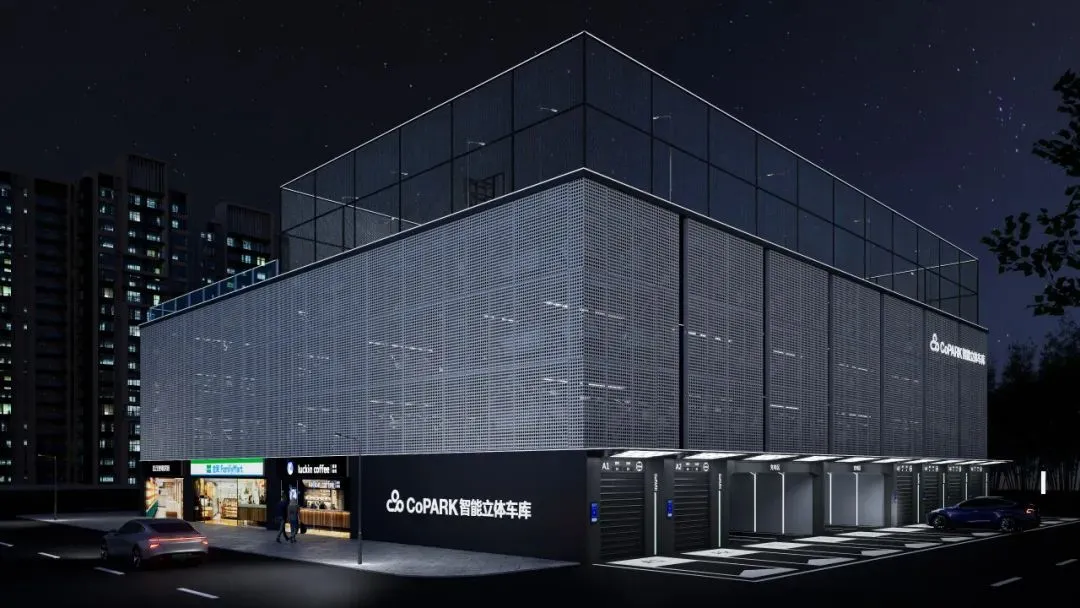
In the process of urban renewal, the difficulty of parking in old residential communities has become a common livelihood pain point. For communities built in the 1980s and 1990s, the planned parking space ratio is severely insufficient. With the continuous growth of private car ownership, the contradiction between parking supply and demand is becoming increasingly prominent. Traditional ground-level marking renovations have exhausted available space, and management measures such as tidal parking spaces and shared parking spaces can only provide short-term relief without fundamentally solving the problem. Three-dimensional parking facilities, which occupy less land and offer greater capacity, have become the preferred solution to alleviate parking difficulties in old residential communities. However, the complex conditions of old communities impose strict requirements on project safety, compliance, and convenience for residents.
I. Core Challenges in Parking Renovation of Old Residential Communities
When three-dimensional parking facilities are implemented in old residential communities, they are prone to multiple issues in approval, construction, and operation due to constraints such as site limitations, underground pipelines, and traffic flow. Improper handling can create safety hazards and even turn a convenience project into a nuisance for residents.
Insufficient Fire Safety Compliance, Noise and Vibration Disturbing Residents
The above-ground space in old communities is limited, and parking garages built close to residential buildings often fail to meet fire safety distance requirements, falling short of regulatory standards. The noise and vibration generated by equipment operation can easily trigger resident complaints, affecting environmental approval and community harmony.
Unknown Underground Structures, High Construction Risks
Most old residential communities were built many years ago, and basic data such as underground pipelines and hidden wells are often missing. Using deep foundation excavation plans can easily damage underground structures, causing issues such as building settlement and pipeline leaks, with high repair costs and irreversible safety risks.
Narrow Internal Roads, Difficulty in Traffic Organization
The limited width of internal roads in communities makes it difficult to meet the turning radius requirements for entrances and exits of three-dimensional parking garages, leading to congestion and scratches when vehicles enter and exit. Mixed pedestrian and bicycle traffic complicates traffic separation planning, and unreasonable entrance/exit designs can increase the traffic pressure on the community.
II. Systematic Solutions for Three-Dimensional Parking Renovation in Old Residential Communities
Based on industry practices and common issues in old communities, a core set of practical and replicable solutions has been established:
Foundation Construction: Shallow Foundation Priority, Low-Disturbance Construction
Adopt a shallow foundation plan that avoids deep excavation, using only ground reinforcement. This bypasses complex underground pipelines, shortens the construction period, reduces costs, and minimizes disruption to residents.
Fire Protection and Noise Reduction: Fully Enclosed Design, Multi-Layered Protection
The garage adopts a fully enclosed + fire compartment design to circumvent fire distance restrictions and adapt to the conditions of old communities. It is equipped with a gas extinguishing system to avoid water damage, and buffer and vibration-damping components are added to further reduce noise and vibration.
3. Traffic Organization: Fine Planning, Ensuring Smooth Flow
Optimize the location of entrances and exits, set up one-way traffic routes, and widen key traffic nodes to resolve issues such as meeting oncoming vehicles and congestion. Implement pedestrian-vehicle separation, combined with intelligent barrier guidance, to improve traffic efficiency and safety.
Function Integration: Parking + Convenience, Integrated Development
Promote the joint construction of parking buildings and community service complexes. Reserve space on the ground floor or podium for convenience amenities such as senior activity centers, community convenience stores, and fresh food pickup points. This model has been validated in cities like Wuhan and Guangzhou, gaining resident support, smoother approvals, and more sustainable operations.
Case Reference:
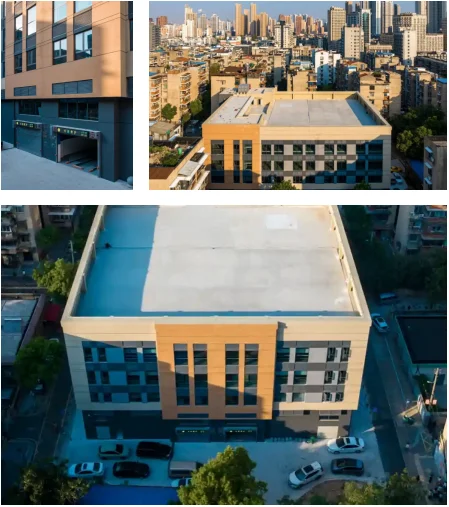
The Wuhan Zhiyin Comprehensive Parking Building, built by Nantong Crean Intelligent Equipment Co., Ltd., is a three-story above-ground horizontal movement three-dimensional parking building with 153 designed parking spaces. It effectively relieves parking pressure in the community and its surroundings, serving as a benchmark project for three-dimensional parking renovation in old residential communities. The ground-floor commercial facilities of this parking building have gradually attracted tenants, including fresh supermarkets, training institutions, and catering businesses. The top floor is designed as a leisure and sports public space such as a community activity center and a public stage. From the initial design concept, this project aimed to create a community living center integrating multiple functions, addressing residents' daily concerns, and building a "small yet beautiful" 15-minute "parking + lifestyle" circle.
III. Summary
The renovation of parking spaces in old residential communities is a systematic livelihood project. It is not simply about installing equipment or adding parking spaces; the core lies in balancing safety compliance with convenience for residents. A successful renovation project must not only solve the parking problem but also take into account fire safety, construction safety, resident experience, and long-term operation. The renovation model centered on shallow foundation construction, fully enclosed fire protection and noise reduction, fine traffic organization, and multi-functional composite operations provides a replicable and scalable path for the renewal of old residential communities, truly achieving convenience for residents and maximizing social benefits.