
Maintenance and Rectification Trends for Mechanical Parking Systems: 2026 Intelligent Parking Equipment O&M Industry Insights

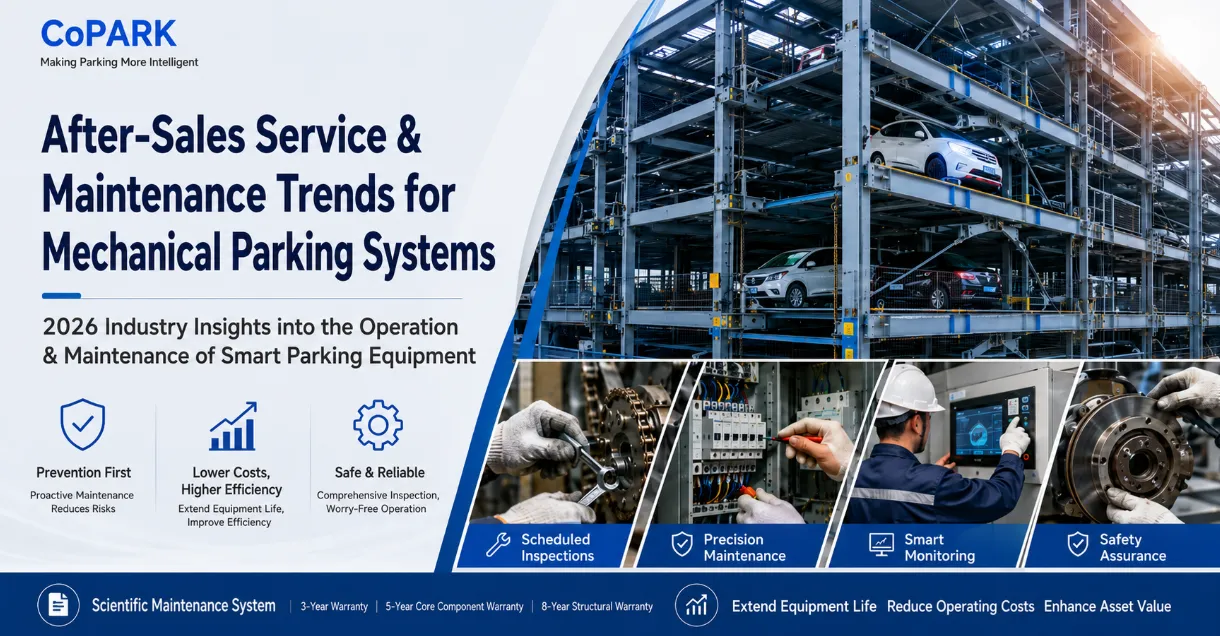
Foreword: Maintenance Trend: From "Repair After Breakdown" to "Prevention First"
Traditional mechanical parking systems generally adopt a passive repair-after-failure maintenance model, which has three core pain points: First, maintenance costs are out of control. Emergency repairs can easily cause collateral damage to components, and maintenance expenses continue to rise. Second, safety hazards are prominent. Operating equipment with defects can easily lead to accidents such as vehicle damage and personal injury. Third, operating revenue is impaired. Equipment downtime directly occupies parking spaces, reduces parking turnover efficiency, and affects operational benefits.
Against this background, the maintenance model is shifting toward proactive management with "prevention first" as its core value, reflected in three aspects: First, regular inspection and maintenance can eliminate potential faults in advance, delay component aging, and extend the overall service life of the equipment. Second, normalized condition monitoring keeps the equipment running stably, avoiding safety risks from the source. Third, planned maintenance replaces emergency repairs, reducing downtime losses and comprehensively lowering the full-life-cycle comprehensive operating cost of the equipment.
Industry Consensus: The "3-5-8" Scientific Maintenance Cycle System
3-Year Minor Repair: Focus on Wear Parts to Ensure Basic Functions
Equipment Full-Life-Cycle Maintenance System · Phase 1 | Preventive Inspection and Replacement of Early-Failure Parts
Core Module: Limit Switches and Proximity Switches
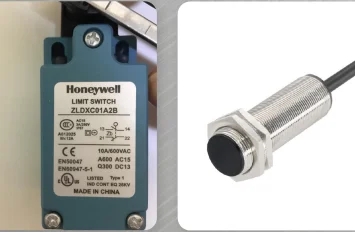
Limit Switches and Proximity Switches
Limit switches and proximity switches are the "nerve endings" of automated equipment control. The former achieves precise positioning through mechanical contact, while the latter uses electromagnetic induction for non-contact detection. Together, they ensure the accuracy and safety of equipment operation.
01 Inspection and Cleaning
Check whether the housing is cracked or damaged and whether the mounting is secure; clean oxidation layers and ablation marks from mechanical contacts; wipe oil, dirt, and dust from the sensing surface; manually trigger the switch to test the flexibility of operation and whether reset is smooth without jamming.
02 Adjustment and Calibration
Precisely calibrate the trigger positions of the switch and the striker to ensure positioning accuracy; measure the actual sensing distance and compare it with the nominal value. If the deviation is too large or the signal is unstable, readjust the installation clearance or replace with new parts.
03 Replacement Criteria
Immediate replacement is required when: the housing shows severe cracks or breakage, and contact ablation or deformation cannot be repaired; sensing sensitivity drops significantly, with frequent false triggering or missed triggering; or the actuating mechanism is jammed and cannot restore normal function.
Extension Module: Maintenance of Other Key Wear Parts
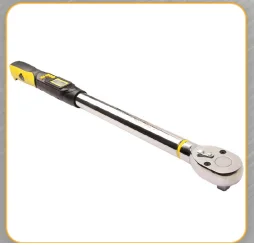
Extension Module: Maintenance of Other Key Wear Parts
Using a professional digital torque wrench to precisely control tightening torque is key to ensuring connection reliability of the equipment.
01 Re-tightening and Anti-loosening of External Fasteners
Use a torque wrench to re-tighten all visible bolts according to standard values (e.g., M16 high-strength bolts ≥260 Nm); carefully check whether anti-loosening washers and lock nuts are intact, eliminating the risk of loosening caused by long-term vibration.
02 Cleaning and Calibration of Key Sensors
Clean the ultrasonic or infrared probes of vehicle detection sensors to remove accumulated dust and oil; wipe the lenses of safety light curtains and photoelectric barriers, calibrate the beam alignment accuracy, and ensure detection signals are accurate.
03 Safety Inspection of Lighting System
Replace faulty bulbs or LED modules to ensure clear working visibility; inspect the firmness of lamp holders, switches, and wiring connections, and investigate electrical safety hazards such as insulation aging and damage.
5-Year Intermediate Repair: Delve into Core Components to Ensure System Stability
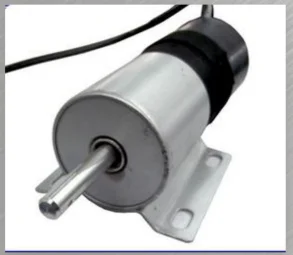
Core Module: Electromagnets and Electromagnetic Brakes
5-Year Intermediate Repair: Delve into Core Components to Ensure System Stability
Core Module: Electromagnets and Electromagnetic Brakes
As the "safety lock" of the equipment, the electromagnet is key to ensuring precise braking and emergency locking of the mechanical system. Its condition directly determines the safety and reliability of equipment operation, so strict inspection and performance verification must be carried out.
01 Basic Inspection and Cleaning
Appearance inspection: The coil housing should have no damage, no overheating discoloration, and ensure that the insulation layer is not aged.
Core cleaning: Remove dust, oil, and rust from the core contact surface to ensure tight engagement.
Terminal tightening: Reinforce the wiring terminals, remove oxidation layers, and prevent poor contact.
02 Performance Verification and Key Indicator Testing
Action test: Engagement and release should be quick, without delay, abnormal noise, or mechanical jamming.
Gap measurement: The gap between the core and armature should be uniform, and the value must strictly comply with equipment standards.
Resistance testing: If the deviation between the measured resistance and the standard value exceeds 10%, it is recommended to replace the coil.
Torque and lining: The braking torque should meet the standard. If the lining wear exceeds 50% or shows cracking, mandatory replacement is required.
Extension Module: Comprehensive Maintenance of the Transmission System
01 Chains and Sprockets
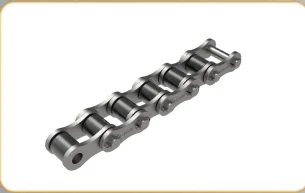
Chains and Sprockets
Wear determination: When the chain elongation rate exceeds 3% or the sprocket tooth surface wear exceeds 20% of the original dimension, immediate replacement is required, and operation with defects is strictly prohibited.
Lubrication specifications: Thoroughly remove old grease and apply high-temperature resistant special grease to ensure full lubrication of pins and bushings.
02 Wire Ropes and Sheaves
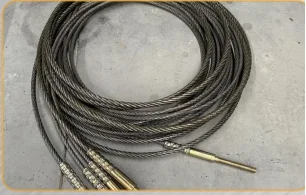
Wire Ropes and Sheaves
Safety red line: When the diameter wear exceeds 7% of the nominal diameter, the number of broken wires exceeds the standard, or the radial wear of the sheave groove exceeds 50%, mandatory scrapping is required.
Fastening inspection: Focus on verifying the tightening state of rope end pressure plates or rope clamps to prevent major accidents caused by wire rope slippage.
03 Gears and Bearings
Condition inspection: Check the gear meshing surfaces for no pitting, scuffing, cracks, or broken teeth; bearings should have no abnormal noise and no abnormal temperature rise.
Grease maintenance: Regularly clean old grease and add suitable lubricating grease to ensure long-term stable operation of transmission components.
Extension Module: Maintenance of Hydraulic Cylinders and Motors
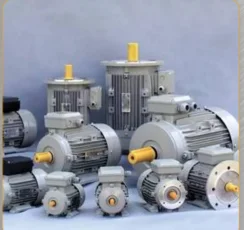
Illustration: CNC Machine Tool Hydraulic Station Assembly
As the "power heart" of the equipment, regular maintenance is the foundation for stable operation.
01 In-depth Maintenance of Hydraulic Cylinder Oil
Core inspection: Regularly check the oil level, oil color, and cleanliness. It is recommended to completely replace the hydraulic oil and replace the filter element simultaneously every 2–3 years. Test whether the system pressure is stable to prevent insufficient pressure from affecting precision.
Seal protection: Check whether the cylinder has oil leakage. It is recommended to replace all sealing rings preventively. Verify the action sensitivity of solenoid valves and the firmness of wiring terminals.
02 Maintenance of Motors and Drive Systems
Condition monitoring: Listen for abnormal noise during operation, and touch the housing to check whether the temperature rise is normal. Regularly inspect the bearings and replenish high-temperature resistant grease.
Insulation testing: Use a megohmmeter to measure insulation resistance. The qualified value should be ≥5 MΩ. If the value is below 0.5 MΩ, it indicates that the motor winding insulation is severely damaged and immediate shutdown for repair is required.
8-Year Major Overhaul: System Renovation and Upgrading to Extend Equipment Life
In-depth Maintenance of the Electrical Control System
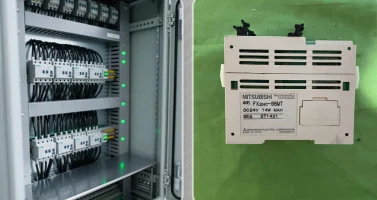
Electrical Control System In-depth Maintenance
The electrical system is the "neural network" of the equipment. Through comprehensive inspection, tightening, and cleaning, this maintenance eliminates potential hazards of poor contact and overheating, ensuring the stability of the control system under long-term high-frequency operation and providing a solid guarantee for continuous production on the line.
01 Internal Wiring Maintenance of the Control Cabinet
Cable aging inspection: Check for hardening and cracking of insulation layers, replace aging cables, and eliminate risks of leakage and short circuits.
Terminal strip torque re-tightening: Use a professional torque screwdriver to re-tighten one by one, eliminating loosening and heating, and ensuring connection reliability.
02 Special Detection of Core Electrical Components
PLC and controller: Clean the heat dissipation channels of modules, back up all program data, and test the I/O port status point by point.
Drive and protection components: Check contactor contact ablation, clean the frequency converter filter, and test capacitor health.
Core Module: Operation Interface and Safety Devices
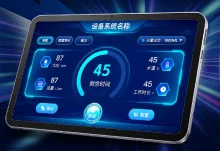
Core Module: Operation Interface and Safety Devices
Intelligent industrial control touch terminal, integrating real-time status monitoring and fault pre-warning.
01 Operation Interface and Interaction Verification
Terminal inspection: Confirm that the touch screen has no dead zones, buttons are free from jamming or damage, and the display is clear without noise. Aging components must be replaced immediately.
Emergency stop test: Test emergency stop buttons at all points to verify that they can instantly cut off the power supply, ensuring effective physical protection under emergency conditions.
02 Safety Protection Device Verification
Anti-fall test: Simulate chain breakage and rope breakage faults to verify that the anti-fall device can lock instantly at the millisecond level and reliably hold, eliminating the risk of falling from height.
Slack detection: Verify the sensitivity of loose rope/chain sensors to ensure that the system immediately triggers shutdown protection when the rope or chain becomes slack, preventing equipment from losing control.
Extension Module: Steel Structure Flaw Detection and Anti-corrosion
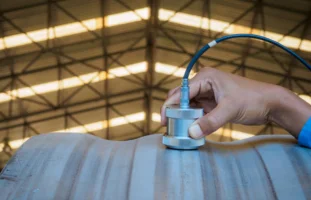
Extension Module: Steel Structure Flaw Detection and Anti-corrosion
01 Flaw Detection and Anti-corrosion Renovation
Flaw detection: Use ultrasonic nondestructive testing technology to conduct a comprehensive scan of primary load-bearing members, critical welds, and high-strength bolted joints, accurately identifying hidden defects such as internal micro-cracks and incomplete penetration.
Anti-corrosion repair: Thoroughly remove rust from corroded areas and areas with coating peeling, then reapply epoxy primer and anti-corrosion topcoat, with special reinforcement of protection in dead corners and water-prone areas.
02 Rigorous Full-load Verification of the Complete Machine
Test standards: After the overhaul is completed, conduct no fewer than 5 no-load and 110% rated load full-load operation tests to simulate extreme working conditions.
Safety verification: Item by item, verify the smoothness of equipment operation, positioning accuracy, and braking reliability to ensure that safety interlock functions such as emergency stop, limit, and overload protection are 100% effective.
Key value: Thoroughly eliminate potential safety hazards in the steel structure, and through rigorous testing ensure long-term reliable operation of the equipment, laying a solid safety foundation for production operations.
Summary: Scientific Maintenance, Infinite Value
Core Value of Maintenance
Safety assurance Eliminate potential safety hazards at the source, reinforce the protection baseline, and comprehensively safeguard the lives and property of users.
Cost control Planned maintenance costs are far lower than emergency repair costs, effectively avoiding operational losses caused by unexpected downtime.
Efficiency improvement Reduce unplanned equipment downtime, optimize vehicle turnover efficiency, and significantly enhance the operational benefits of the garage.
Asset appreciation Effectively extend the service life of equipment, maintain good operating conditions, and continuously increase the long-term value of assets.
Implementation Action Recommendations
Establish a comprehensive maintenance archive Create a dedicated "health record" for each piece of equipment, detailing installation, previous maintenance, faults, and repair details, achieving full life-cycle traceability management.
Select a professional maintenance team Prioritize professional teams with special equipment maintenance qualifications, mature technology, and rich experience to ensure operational compliance and repair quality.
Stock core common spare parts According to equipment model and usage frequency, scientifically stock core spare parts such as wearing parts and control motherboards, shortening emergency repair response time.
“Scientific maintenance is the cornerstone of long-term safety, stability, and efficient operation of three-dimensional parking garages, and is also the core guarantee for continuous growth of asset value.”