
How to Ensure Long-Term Stable Operation of Mechanical Parking Systems
Discover essential tips to ensure the long-term, stable operation of mechanical parking systems. From daily maintenance to system optimization, learn how to improve reliability, safety, and efficiency over time.

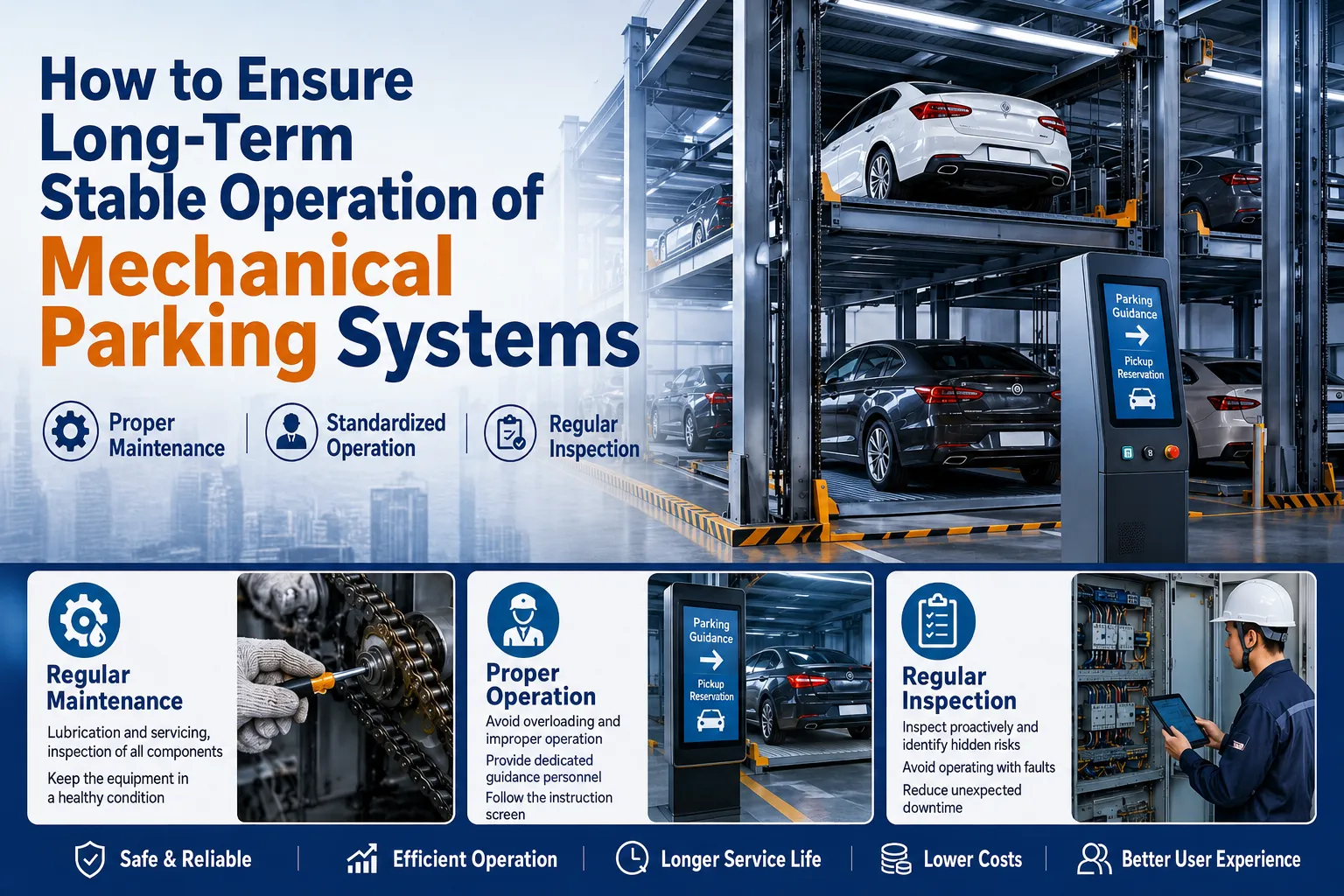
As urban parking demand continues to grow, mechanical parking garages have become an important parking solution for commercial complexes, residential areas, and public facilities. While mechanized, high-density parking systems bring convenience and efficiency, their long-term stable operation relies on scientific maintenance management. Many garages run smoothly initially, but due to inadequate management or improper operation, cases of malfunctions, downtime, or even safety accidents are not uncommon.
This article will share how to extend the service life of mechanical parking garages and ensure smooth and efficient operation from three aspects: regular maintenance, correct usage and operation, and regular inspections.
1. Regular Maintenance: Keep Equipment in "Healthy Condition"
The core of a mechanical parking garage is a complex mechanical network composed of entrances and exits, lifting mechanisms, transverse mechanisms, transfer mechanisms, and control systems. Each component is key to the normal operation of the system. For long-term stable operation, regular maintenance is an indispensable part.
1.1 Lubrication Maintenance: Ensure Smooth Mechanical Movement
Mechanical components generate friction during operation. Long-term lack of lubrication can lead to accelerated wear, increased noise, and even damage to parts.
Selection of lubricants: Choose appropriate lubricating oil or grease as required by the manufacturer. Do not change arbitrarily to avoid reducing lubrication effectiveness or causing corrosion.
Lubrication cycle: Based on operating frequency, lubricate key components monthly or quarterly, especially chains, gears, bearings, and guide shoes.
Inspection after lubrication: Check that the lubricant is evenly applied to critical areas to avoid local dry friction and wear.
1.2 Component Inspection: Identify Hazards and Prevent Failures
Mechanical parking garages involve various key components such as motors, reducers, sensors, steel cables, and guide rails. Any abnormality in these components can affect overall operation.
Motors and reducers: Check operating noise, temperature, and vibration. Address abnormalities promptly.
Steel cables and chains: Observe wear, stretching, and breakage. Replace if necessary.
Guide rails and rollers: Ensure they are not loose or corroded, and maintain flatness.
Sensors and control systems: Calibrate regularly to ensure accurate vehicle positioning, lifting, and transverse movements.
Through regular maintenance, potential issues can be prevented before they manifest, reducing sudden failures and downtime risks, making the mechanical garage run as smoothly and reliably as a "well-maintained car."
2. Correct Usage and Operation: Proper Use Is the First Step to Stable Operation
Even with high-quality equipment, improper use can lead to frequent failures and shorten service life. Mechanical parking garages are highly automated devices, and operating standards are crucial.
2.1 Avoid Overloading and Misoperation
Strictly adhere to load limits: Each parking space, lifting platform, or transfer mechanism has a clear load limit. Overloading can cause motor overheating, mechanical deformation, or even breakage.
Vehicle size control: Ensure parked vehicles meet garage design standards, including length, height, and width. Oversized or overly tall vehicles may trigger alarms.
Standard operating procedures: Prohibit arbitrary operation of control panels or mode switching to prevent misoperation and safety incidents.
2.2 Assign Dedicated Guides
For large or high-frequency mechanical garages, on-site guidance by professional personnel can significantly reduce the risk of misoperation:
Guide vehicle owners to park correctly: Ensure vehicles are positioned accurately and not deviating from the pallet.
Monitor abnormal conditions: Detect issues such as vehicle misalignment, unclosed door stops, or other potential problems in time.
Provide safety reminders: Remind owners not to open the trunk inside the garage, not to linger in the equipment area, ensuring the safety of people and vehicles.
2.3 Follow Guidance Screens
Modern mechanical garages are often equipped with smart guidance screens or APP systems:
Vehicle owners should strictly follow the system's operational guidance, avoid bypassing or intervening arbitrarily, so that the system can operate efficiently according to the designed process.
3. Regular Inspections: Prevention Over Repair, Avoid "Working While Sick"
Even with daily lubrication and standardized operation, equipment may develop potential hazards due to long-term operation. Regular inspections, through systematic checks and data analysis, identify early problems to prevent minor issues from escalating into major accidents.
3.1 Inspection Cycles
Quarterly inspection: Comprehensive check of key mechanical components, electrical control systems, and safety devices.
Annual inspection: In-depth evaluation of the entire system with manufacturer technical support, including motor load testing, PLC program checks, and sensor accuracy calibration.
3.2 Inspection Content
Mechanical wear: Condition of chains, gears, cables, and guide rails.
Safety devices: Sensitivity and reliability of limit switches, buffers, and emergency stop devices.
Electrical system: Motor operating current, line insulation, electrical cabinet temperature, and data acquisition system status.
Control program: Verify that system logic matches actual operation to prevent abnormal program behavior causing misoperation.
3.3 Prevention Over Repair, Reduce Sudden Downtime
The greatest advantage of regular inspections is prevention over repair:
Replace parts in advance when minor wear is detected
Adjust loose or misaligned components
Calibrate sensors and control systems
Through scientific inspections, avoid equipment "working while sick," reduce downtime and repair costs, and ensure long-term stable operation of the mechanical garage.
4. Additional Tips: Small Tricks to Extend Equipment Life
In addition to the above three points, some details in daily management can improve the lifespan of mechanical garages:
Keep the environment clean: Regularly clean dust, gravel, and standing water to prevent wear or corrosion of mechanical parts.
Maintain equipment operation logs: Record detailed information for each failure, anomaly, or maintenance activity to aid trend analysis and preventive measures.
Train operators: Ensure on-duty personnel and guides are familiar with operational procedures and emergency response plans to reduce human errors.
Choose genuine parts suppliers: Original or high-quality accessories can effectively reduce failure rates and ensure long-term stability.
5. Conclusion
Mechanical parking garages are an important tool for efficient urban parking. To ensure long-term stable operation, focus on three aspects:
Regular maintenance: Lubricate, inspect, and maintain to keep mechanics "healthy."
Correct usage and operation: Adhere to load limits, assign dedicated guides, and follow system guidance.
Regular inspections: Prevent by checking, identify hazards, and avoid "working while sick."
With daily maintenance, standardized use, and regular inspections, mechanical garages can not only greatly extend their service life but also maintain efficient and safe operation, providing stable and reliable parking services for cities.
In the long run, scientific management of mechanical garages saves repair costs and improves user experience, truly achieving the goal of safety, efficiency, intelligence, and durability.