
Extreme Cold, Rapid Delivery: Xinjiang Mechanical Parking System Project

1. Project Overview
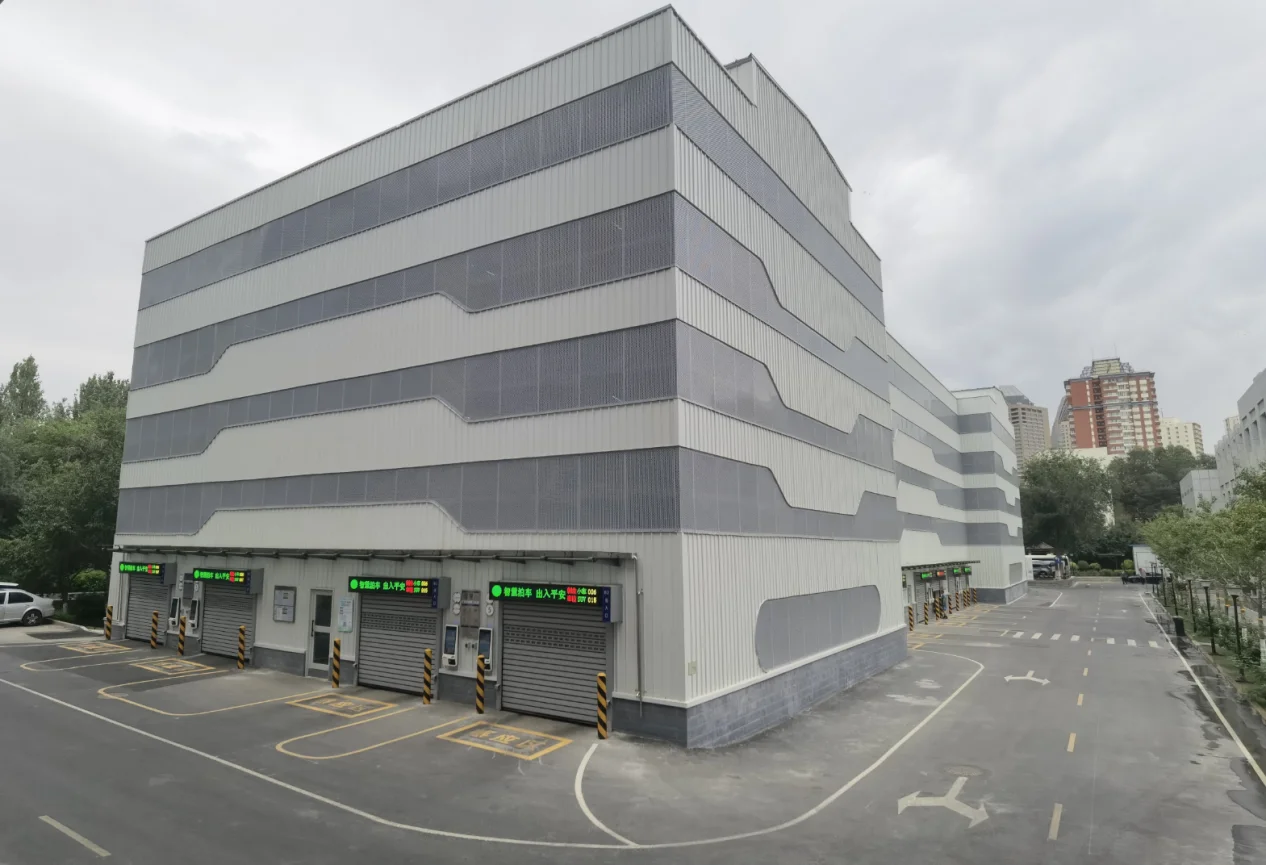
This project involves the construction of a large-cabin mechanical parking system at the Xihou Street Centralized Office Area in Tianshan District, Urumqi, Xinjiang. A total of 7 parking structures with 14 entrances and exits will be built, providing 420 parking spaces. The building has 8 floors: 2 underground floors for small cars and 6 above-ground floors with designated spaces for SUVs and compact cars. The maximum load capacity of the equipment is 2,500 kg, the designed service life is 30 years, and the fire resistance rating is Class I.
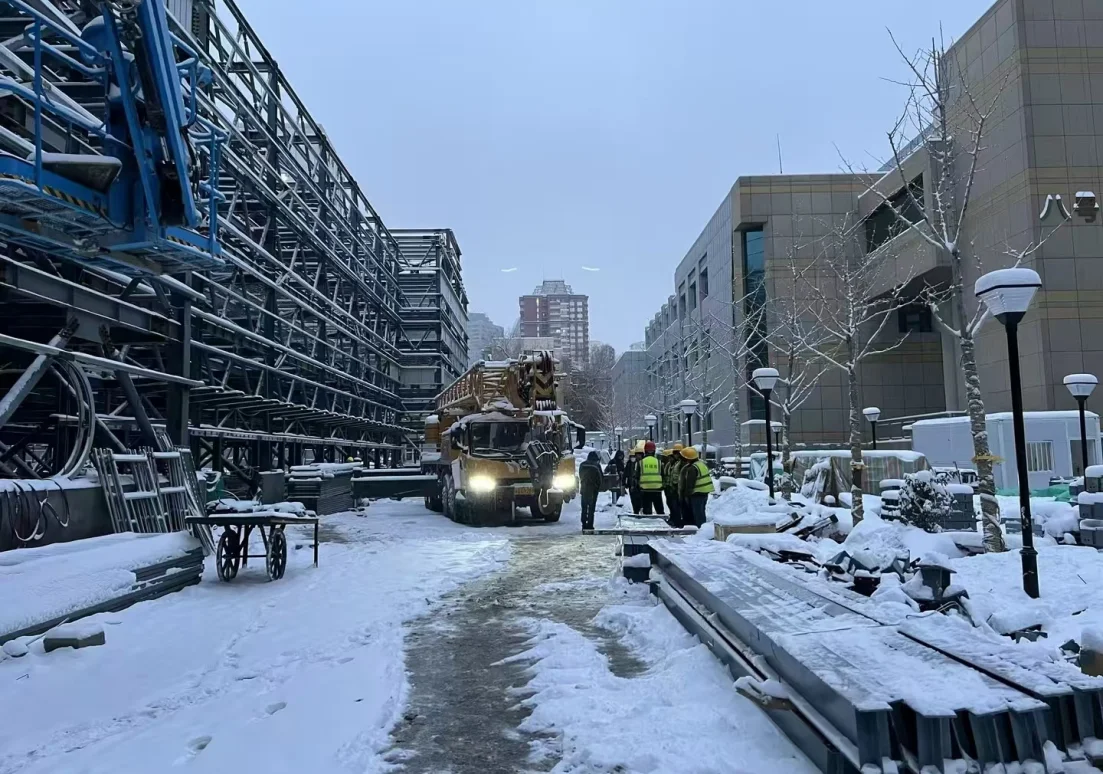
The project is implemented during the deep-winter construction window in Urumqi. The entire area is covered by long-term heavy snow, with roads and sites continuously accumulating snow and ice, presenting three core hard challenges:
First, the extreme low-temperature environment. The annual minimum temperature can reach -30°C. Steel structural components left outdoors overnight become completely covered with snow and ice, posing significant safety hazards for high-altitude hoisting, welding, and equipment wiring operations, including anti-slip risks, frostbite, and equipment freeze damage.
Second, the delivery period is extremely tight. The overall full-process construction period is only 3.5 months, with design, production, installation, and acceptance highly compressed, leaving no buffer time.
Third, there are special regulatory requirements for regional special equipment. The Xinjiang Special Equipment Inspection Institute has clearly stipulated that on-site welding of main steel structures is prohibited for local projects, and equipment and electronic control components must be adapted to high-cold working conditions.
As the project manager, I need to lead and coordinate the full-chain management from project initiation, design, production, delivery, on-site installation, special equipment acceptance, to after-sales operation and maintenance. Through refined management measures such as proactive risk prediction, multi-line parallel control, special winter safety assurance, and humanistic team motivation, I led all design, production, and construction personnel to overcome multiple difficulties including extreme cold, tight schedules, and the risk of shutdown during the Spring Festival. The project was ultimately delivered on schedule and passed the full inspection by the Special Equipment Inspection Institute in one attempt, while also forming a standardized management implementation template for large-scale parking systems in high-cold regions.
2. Project Initiation Stage: Proactive Full-Process Risk Control to Eliminate Hidden Dangers from the Source
At the early stage of project initiation, we adhered to the management approach of "site survey first, scheme second, and simultaneous clarification of rights and responsibilities," avoiding in advance the underlying design, contract, and civil works conflicts exposed in the review of similar projects.
2.1 Pre-construction civil work investigation to avoid spatial conflicts and defects
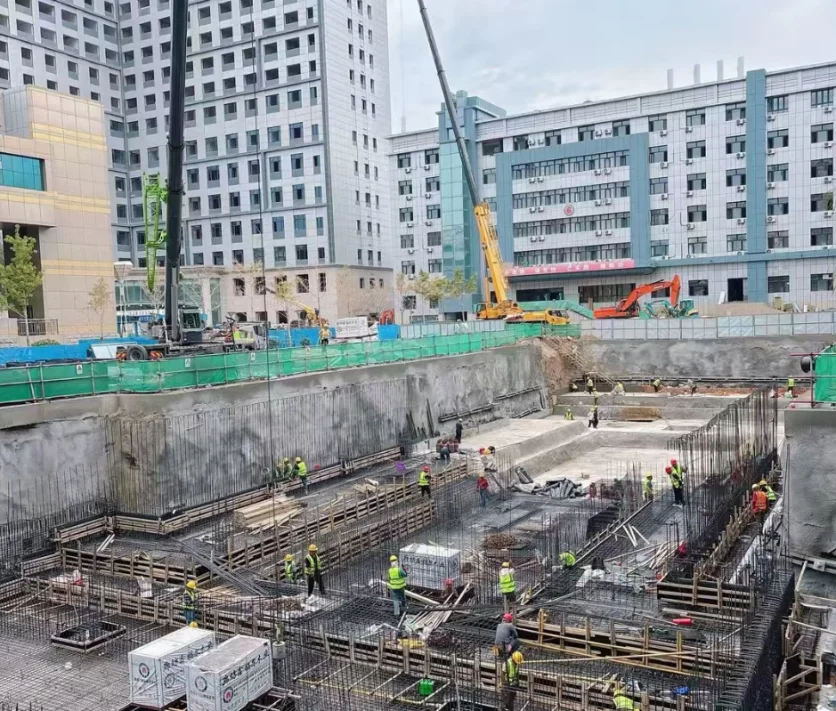
Leading a joint team with civil and structural design personnel, we conducted on-site surveys and identified in advance the hidden conflict between the lifting guide rail columns and the retaining wall and underground sump pit. We simultaneously coordinated with the civil works contractor to optimize the foundation planning, completely resolving the rework problems of later column offset and large-scale hole correction found in similar projects. At the same time, we reviewed the civil construction standards and agreed in advance on a mechanism for full-area elevation re-measurement after the completion of civil works, thereby avoiding the common quality defects of floor elevation differences on basement level 2 and excessive height errors at entrances and exits.
2.2 Clear Division of Contractual Rights and Responsibilities to Eliminate Boundary Ambiguity Risks
In response to the pain point in previous projects where responsibilities for the production, fabrication, and installation of embedded parts were not clearly defined, at the project initiation stage we refined the full-process rights and responsibilities for embedded parts in the contract, clarifying the division of labor among the client, the manufacturer, and the installation team, thereby avoiding later buck-passing and work delays.
2.3 Proactively Interfacing with Local Regulators to Lock in Regional Regulatory Requirements
We proactively interfaced with the Xinjiang Special Equipment Inspection Institute and obtained in advance the local hard standard for steel structure construction — on-site welding of main steel structures is strictly prohibited. This was simultaneously incorporated as a front-end constraint in design and production, and all main beam and cross beam connections were factory-prefabricated and spliced, eliminating large-scale rectification at a later stage.
2.4 Specialized Front-End Planning for High-Cold Working Conditions and Advance Stocking of Long-Lead Materials
In consideration of Urumqi's -30°C low-temperature environment, we led the demonstration of the equipment's low-temperature customization scheme and determined the selection of NORD heated motors, Schneider low-temperature-resistant servo electronic controls, low-temperature-specific cables, and low-temperature-resistant steel structural components. For long-lead materials such as motors with lead times exceeding 6 weeks, we directly issued a stocking plan at the project initiation stage, eliminating the risk of schedule delays from the source.
3. Design Stage: Multi-Disciplinary Concurrent Work and One-Time Elimination of Design Defects Through Drawing Review
The total project duration was only 3.5 months, and the conventional linear design process could not meet the schedule requirements at all. I formulated a management plan with 2.5 times the manpower input and simultaneous multi-disciplinary cross-design, and all staff worked overtime during the Mid-Autumn Festival and National Day to advance drawing output:
3.1 Multiple Rounds of Joint Drawing Review to Comprehensively Optimize Design Flaws
We organized joint reviews involving mechanical, civil, electronic control, installation, and special inspection parties, addressing the full series of design shortcomings in advance: optimizing the rebar layout density to suit embedded part installation; splitting the large maintenance mesh plate into two to reduce on-site installation difficulty; improving the maintenance ladder supporting platform for the machine room, and incorporating the entrance/exit maintenance access scheme into the drawing review standards; optimizing mechanical structural defects such as the diagonal guide of the traverse trolley, buffer failure, flip plate gaps, and docking steps; adjusting the opening size for wheel detection at entrances and exits, optimizing the noise-reduction structure of the patterned cover plate, and improving the thickness of the vehicle stop buffer pad, thereby eliminating on-site modifications from the design end.
3.2 Localized and Differentiated Special Design
Compared with conventional vehicle-carrying plate parking systems, for the Xinjiang project's requirements of large-cabin wheel-clamping transport, straight-in/straight-out rotation, 2500 kg heavy load, and SUV split-level parking, we separately optimized the equipment framework and the traverse rotating platform structure. We differentiated the dimensions of underground level 2 small car spaces and above-ground SUV spaces to match the local parking needs of official vehicles.
3.3 Special Design Optimization for Low-Temperature Equipment
We coordinated the electronic control team to upgrade the full set of low-temperature adaptation solutions: built-in electric heating devices in the motor reduction gearboxes, insulation layers and temperature-controlled heating pads added to the electronic control cabinets, replacement with -30°C-specific sensors and reducers, and selection of low-temperature-resistant steel for all structural components, fully covering the operational requirements of severe cold.
4. Production Stage: Factory Modular Prefabrication and Pre-Assembly to Avoid On-Site Rework
To comply with Xinjiang's local regulatory requirement of "prohibiting on-site welding of main beams" and to compress on-site installation man-hours, I adopted a production control mode of full-component factory prefabrication and complete machine pre-assembly in the workshop. All core mechanical and steel structural components were processed, trial-assembled, and quality-inspected in the workshop, greatly reducing the workload of outdoor construction in sub-zero conditions.
4.1 Modular Split Production and Complete Machine Pre-Assembly System in the Workshop
The parking system was split into four independent modules: the drive travel unit, the cabin vehicle-carrying frame, the parking bay steel frame, and the electronic control assembly. Complete assembly and verification were carried out in the workshop:
The drive travel module integrated the motor, reducer, and travel wheel system into one unit for delivery, with unified numbering and protection. On site, only bolt connection was required, with no need for secondary disassembly and correction.
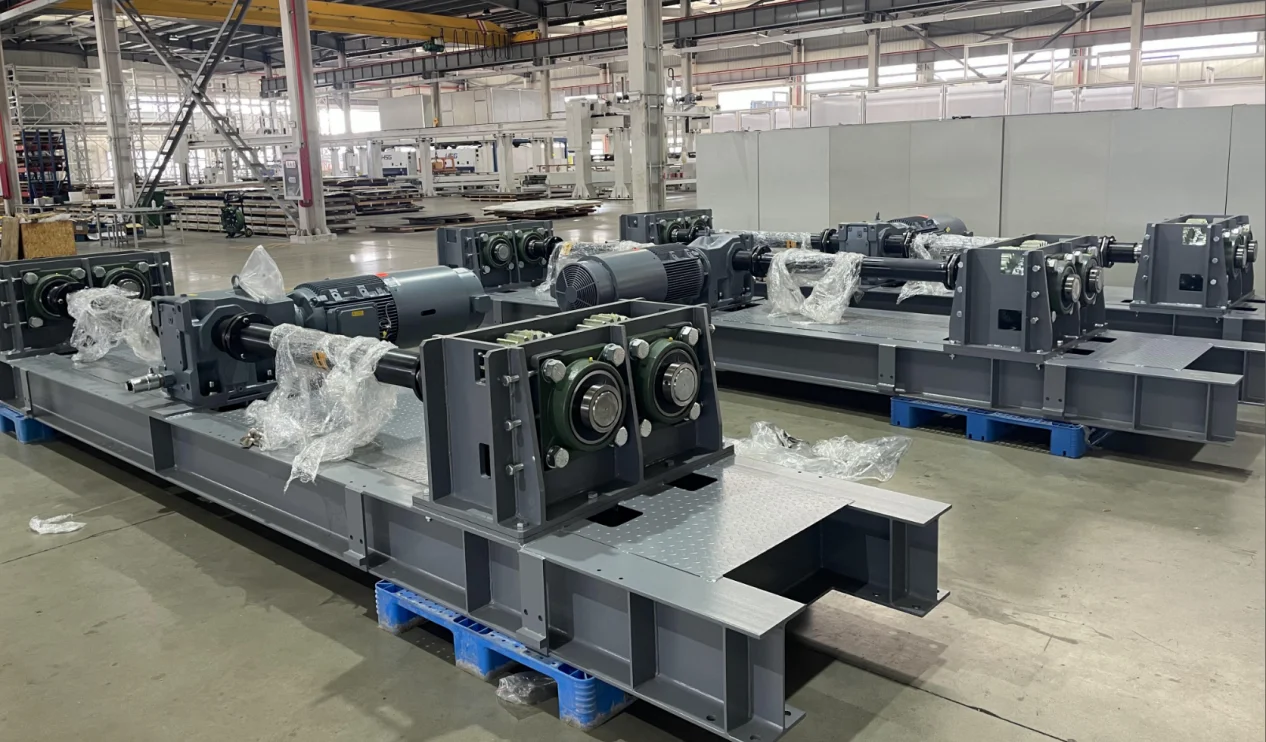
The cabin vehicle-carrying frame is integrally welded and formed, with full inspection of flatness and hole position accuracy completed before delivery, avoiding on-site cutting and correction work under low temperatures in Xinjiang. All steel structural components undergo dimensional verification and flaw detection before delivery, and high-strength bolts are uniformly treated with anti-rust and anti-freeze protection, eliminating on-site rework from the source.
4.2 Closed-Loop Quality Control with Resident Inspectors
Full-time quality inspectors are stationed at the factory throughout the process. A ledger of unique component numbers is established, and unified spraying of markings is implemented to eliminate numbering confusion and mis-shipment or omission. Strict pre-assembly acceptance standards are enforced. If problems such as hole position deviations, frame deformation, or transmission jamming occur, they are directly rectified in the workshop before release, rather than leaving issues to the sub-zero construction site.
4.3 Staggered Batch Production Scheduling
The production cycles of standard parts, non-standard parts, and electronic control components are separated. Long-lead components such as low-temperature-specific motors and heated electronic controls are given priority in production scheduling. The production progress ledger is updated daily to ensure that the supporting materials for each module are completed synchronously, creating conditions for batch shipment.
5. Shipping and Receiving: Standardized Ledger Management and a Two-Person Counting Closed-Loop Mechanism
In response to the three major pain points of previous projects—vague shipping lists, delayed standard parts, and omissions in on-site counting—a standardized logistics control process is established:
5.1 Modular Classified Shipping List
The parking system is divided into independent modules to split the bill of materials. Unified material coding is applied, and the installation area and component purpose are marked. Large steel structures, small electronic control parts, and standard accessories are transported in batches and by zone, with the list accompanying the goods. The on-site team can quickly classify and count the materials.
5.2 Two-Person Verification System upon Arrival
It is clearly stipulated that after each batch of materials arrives, the warehouse administrator and the installation team leader jointly count the materials, sign to confirm the quantity and specifications. Missing or damaged parts are reported back to the production end on the same day for replenishment, eliminating work stoppages caused by missing parts.
5.3 Low-Temperature Transport Protection Control
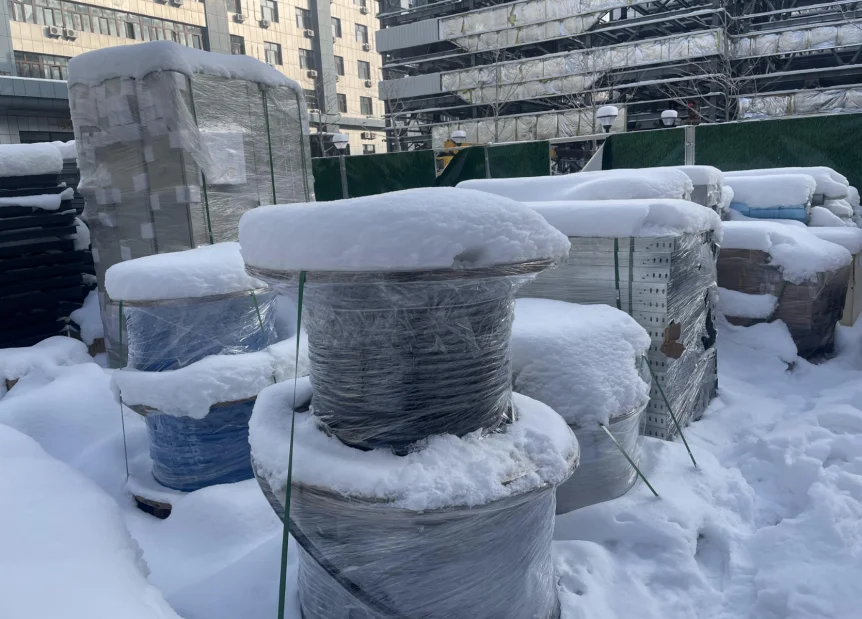
We coordinated logistics to transport materials in staggered batches, avoiding extreme snowstorm weather in Xinjiang. Large steel structural components were fully covered with thickened insulated tarpaulins to prevent icing and rust during transport. Cables and electronic control components were separately packed with thermal insulation to avoid freeze damage at low temperatures.
6. On-Site Installation Stage: Battling Extreme Cold + Full Team Persistence Through the Spring Festival, Ensuring Both Safety and Schedule
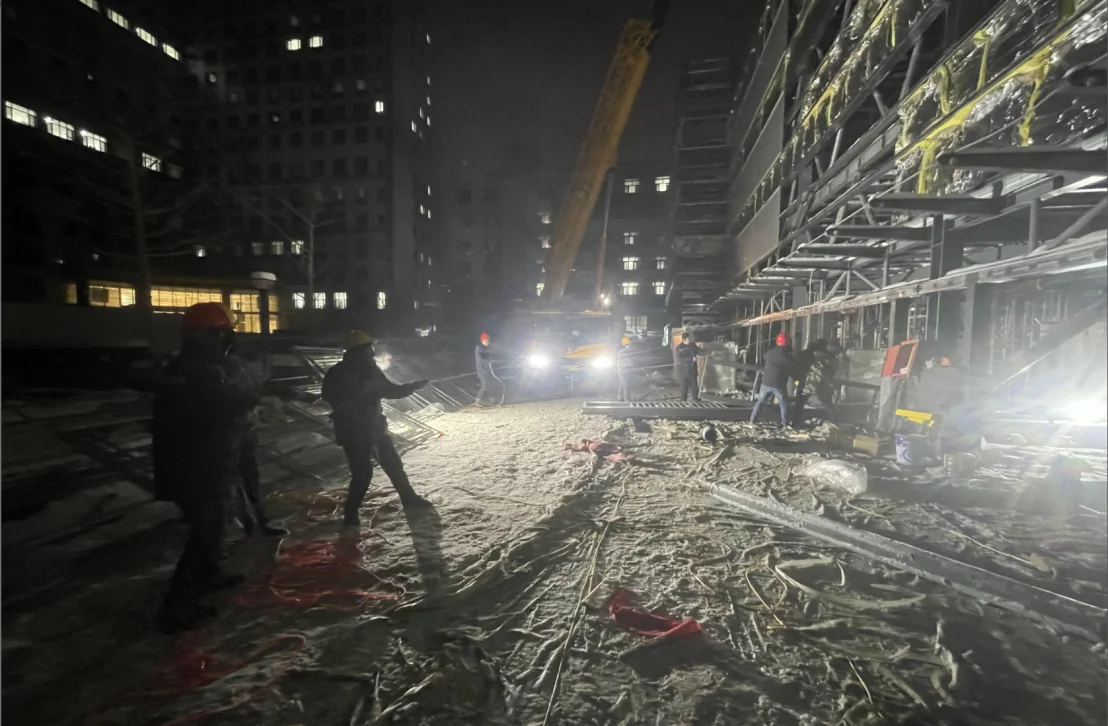
This stage was the most difficult part of project management and the greatest test of team cohesion. The entire construction process took place in the deep winter of Urumqi, with long-term snow accumulation on the site. Materials arriving on site and left in the open overnight were completely covered by heavy snow, and steel structures and cable surfaces became iced over. High-altitude hoisting, steel structure splicing, and electronic control wiring all posed significant safety risks. At the same time, it coincided with the Spring Festival holiday, creating a huge risk of personnel loss and schedule stagnation. I implemented refined management measures simultaneously in three aspects: safety management, schedule coordination, and humanistic care.
6.1 Special Safety Control for Extreme Cold Winter Construction
(1) Daily advance de-icing and snow removal operation mechanism
The early shift entered the site one hour in advance each day, organizing teams to comprehensively clear snow and ice from steel columns, steel beams, hoisting frames, ladders, and incoming materials. Personnel working at heights were required to wear thickened cold-proof and anti-slip safety shoes, freeze-proof gloves, and anti-slip safety ropes. A dedicated on-site safety officer supervised high-altitude operations throughout, preventing accidents such as slipping and falling due to icing and metal frostbite.
(2) Optimization of staggered construction procedures
Avoiding the extreme cold period from midnight to 8 a.m., high-altitude hoisting and steel structure bolt splicing were arranged during the relatively warmer daytime hours. Before all electronic control wiring, cables and control cabinets were moved into insulated shelters in advance to thaw, preventing low-temperature cable embrittlement and damage.
(3) On-site cold protection and logistical support
Enclosed insulated temporary dormitories were built on the construction site, equipped with 24-hour hot water and heating equipment. Cold-proof clothing and thermal protective gear were distributed in full, and hot drinks and hot meals were provided on a regular schedule. Special pre-shift briefings on low-temperature freeze prevention, anti-slip measures, and electrical safety were conducted daily, balancing construction safety with personnel health.
6.2 Manpower Coordination for Extreme Schedule Compression and Round-the-Clock Parallel Construction
More than 20 professional installation workers were deployed, divided into 7 parking structure zones for simultaneous parallel operations, with a two-shift rotation system. To catch up with delivery milestones, continuous night hoisting operations were carried out multiple times.
In the deep night with temperatures below minus 20 degrees, the site was muddy with accumulated snow and the wind was biting. The crane lights became the only light source on site. Construction personnel, wrapped in thick cotton coats, still persisted in hoisting and steel frame splicing work. I stayed on site throughout to coordinate and dispatch, staying on site at night to coordinate the cross-construction of cranes, materials, and civil works. A progress review meeting was held every day in the early morning, and issues of the day were rectified in a closed loop on the same day.
6.3 Full Team Staying on Site Through the Spring Festival, Everyone's Dedication to Hold the Delivery Milestone
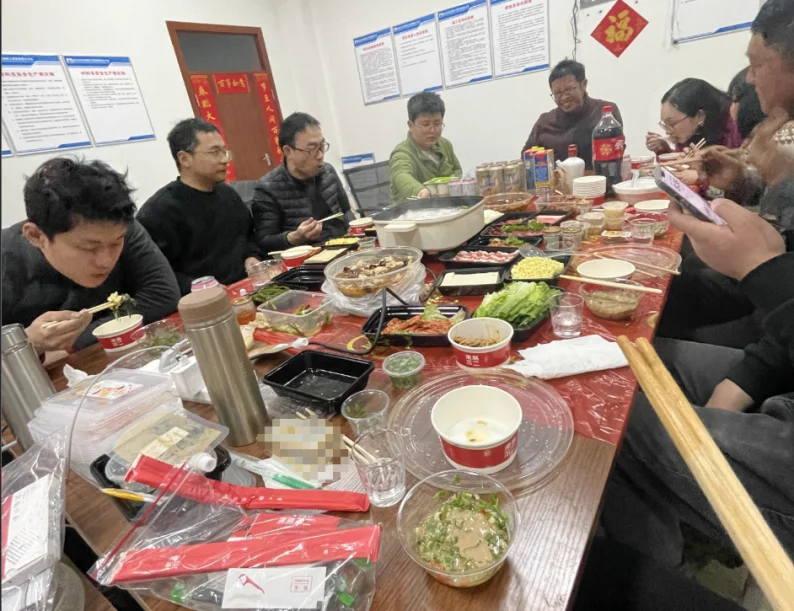
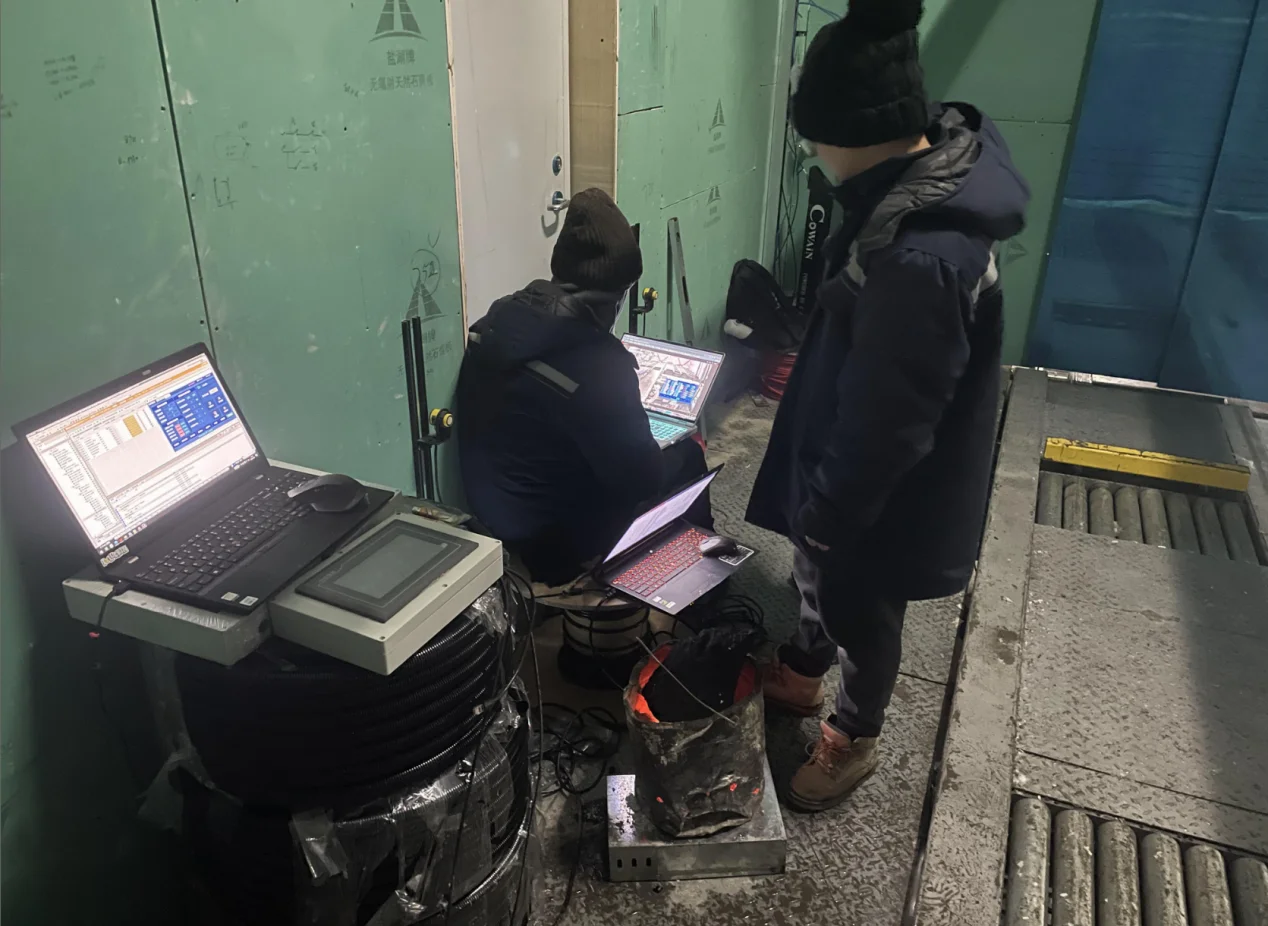
To avoid project delays caused by the Spring Festival shutdown, a full mobilization and communication session was organized before the holiday. All construction and technical personnel voluntarily gave up returning home for reunion, and the construction site did not stop work for a single day throughout the Spring Festival holiday. When touching outdoor metal components, one would instantly feel frozen stiff, yet the workers still persisted in high-altitude installation and pipeline laying; technical personnel carried out uninterrupted equipment joint debugging in simple insulated areas.
Mechanical and electronic control technicians stayed at the debugging points, running programs simultaneously on multiple laptops, repeatedly testing the operating parameters of lifting, traversing, and safety protection devices at low temperatures. In response to problems such as electronic control start-stop delays and sensor freeze sensitivity in extreme cold environments, they optimized the debugging plan on site, ensuring that the entire parking system is adapted to local winter working conditions.
7. Acceptance Stage: Staged Self-Inspection + Proactive Interface with Regulators, One-Time Pass of Special Equipment Verification
To avoid concentrated rectification during the acceptance stage, I formulated a three-level acceptance process of sub-module and sub-layer self-inspection, pre-acceptance, and formal special inspection:
7.1 Itemized and Segmented Self-Inspection
Basic civil works, steel structure main body, lifting cabin, traverse trolley, entrance/exit equipment, and electronic control systems were self-inspected item by item in modules, with complete inspection records retained. Gaps, height differences, and equipment faults found were debugged and rectified in advance.
7.2 Proactive Pre-Acceptance Interface with the Special Equipment Inspection Institute
When the project reached 80% completion, we proactively invited engineers from the Xinjiang Special Equipment Inspection Institute to conduct on-site pre-verification. We communicated and optimized in advance regarding buffer devices, safety protection, low-temperature electronic control systems, and factory-prefabricated steel structure splicing structures, completing all compliance items.
7.3 Full-System Linked Type Test
Full-process vehicle access linkage tests were completed for all 420 parking spaces. The traverse rotation, lifting, and wheel-clamping transport systems operated smoothly. Buffers, limit switches, and anti-fall safety devices all met the standards. The project passed the special equipment type test and completion acceptance in one attempt, with no rectification items.
8. Proactive After-Sales Layout: Localized Long-Term Operation and Maintenance, Adapted to Long-Term Use in Xinjiang's High-Cold Environment
Project delivery is not the end of management. I planned a localized after-sales guarantee system in advance to eliminate the client's concerns about later operation and maintenance:
8.1 Advance Stocking of Local Spare Parts
A project-specific spare parts warehouse was established in Urumqi, with core wearing parts such as low-temperature heating motors, servo drives, cold-resistant sensors, chains, and buffer pads stocked in advance. Low-temperature-specific accessories were stored separately by category.
8.2 Hands-On Training and Handover to the Local Operation and Maintenance Team
Headquarters electronic control engineers were arranged to stay on site for 15 days to provide full-process practical training to the client's operation and maintenance personnel, focusing on special operations such as low-temperature equipment start-stop, maintenance of electronic control heating systems, and winter steel structure de-icing maintenance.
8.3 7×24 High-Cold Emergency Response Mechanism
A dedicated after-sales communication group for the Xinjiang region was established, with a dual-line response from the headquarters technical team and local operation and maintenance personnel. For equipment failures in sub-zero temperatures, on-site handling can be provided within 4 hours, ensuring the parking system operates stably throughout the year.
9. Project Management Summary and Team Acknowledgments
This project was successfully delivered under multiple pressures: an extreme construction period of 3.5 months, extreme cold construction at -30°C, local special equipment regulatory norms, and personnel shortages during the Spring Festival. The core support came from four management approaches: full-cycle proactive risk control, factory modular prefabrication to reduce on-site workload, multi-process cross-parallel refined management, and people-oriented on-site coordination. Relying on management actions such as early drawing review, complete machine pre-assembly in the workshop, and local steel structure prefabrication, we completely avoided full-process rework problems found in similar projects, such as embedded part deviations, on-site steel structure cutting, and equipment assembly defects. This fully verified the feasibility of the full-chain control model for large mechanical parking systems in high-cold regions.
The successful completion of the project could not have been achieved without the selfless dedication of all front-line construction personnel. In deep winter snowstorms with biting cold winds, everyone voluntarily gave up Spring Festival family reunions and stuck to the front line of hoisting, installation, and debugging day and night. Braving extreme cold and working continuously, they held the delivery milestone with their persistence. The design, production, logistics, and technical teams carried out cross-regional full-process linkage, responding efficiently to various on-site changes and rectification needs, forming a team synergy of unity and collaborative攻坚.
This Xinjiang Xihou Street project has formed a standardized management scheme for large-cabin mechanical parking systems adapted to the high-cold regions of Northwest China, providing a complete and replicable management reference template for project initiation, design, production, construction, and operation and maintenance of similar projects in low-temperature regions of Northwest China in the future.